
The design challenge
Combine match-puzzle clarity with the pressure of tactical combat.
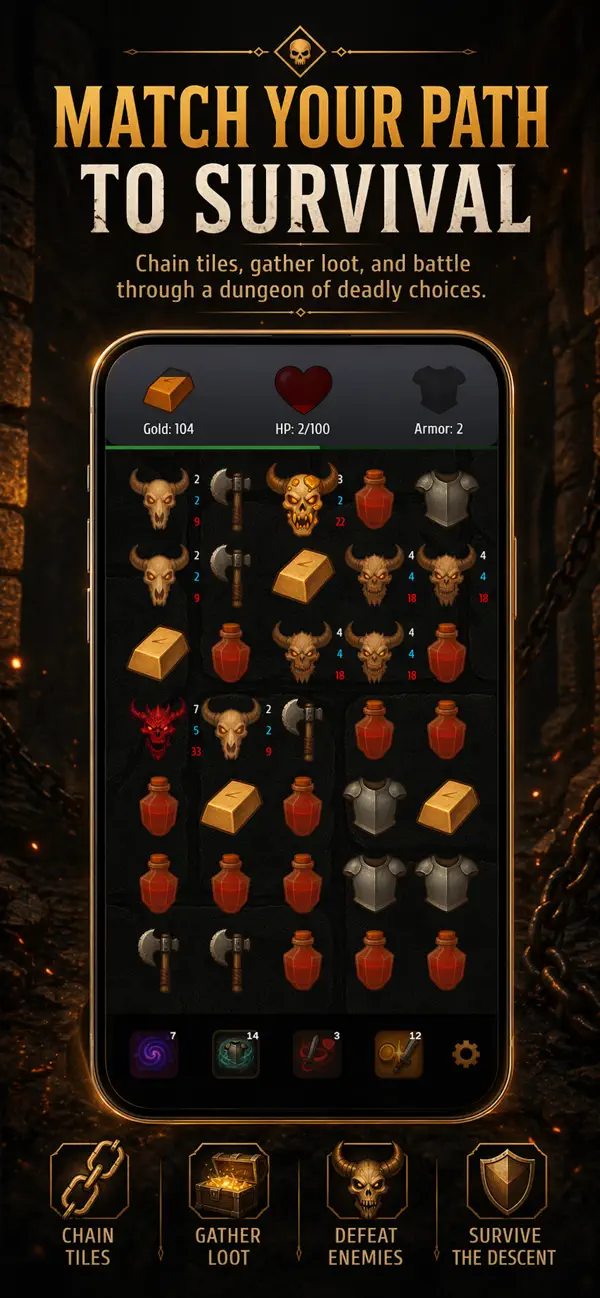
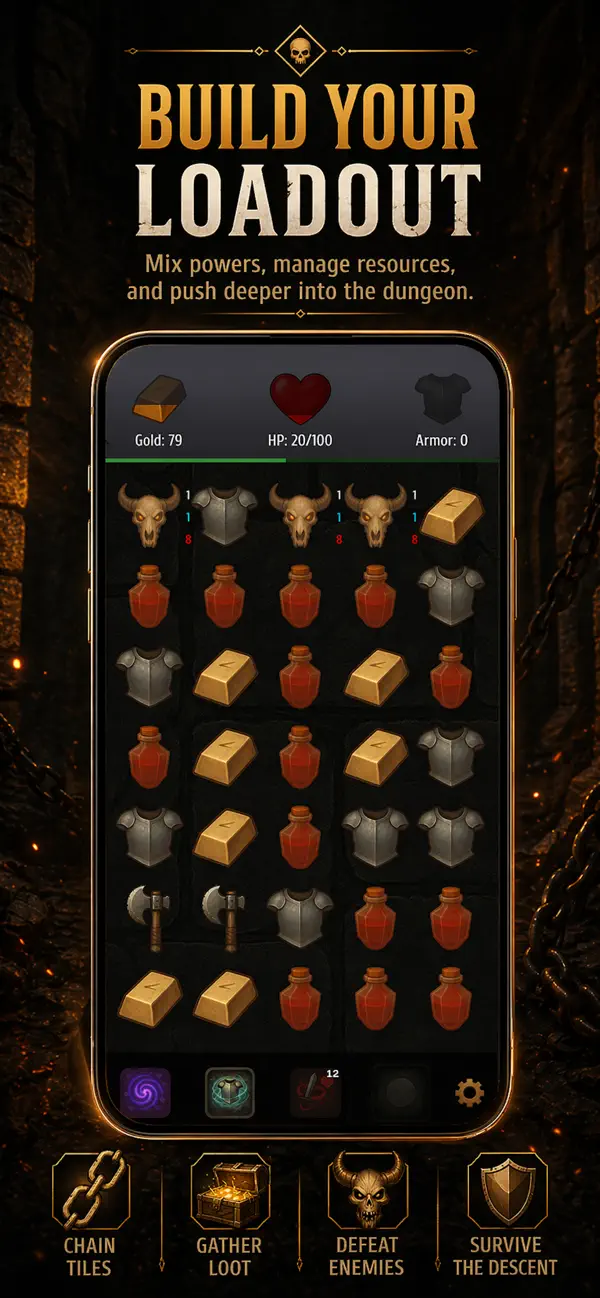
The board needs to communicate several systems simultaneously: which tiles can be chained, what each enemy will do, the player’s health and armor, available resources, and the powers that can alter the next move.
The challenge was making those systems meaningful without overwhelming a phone screen. A player should be able to understand the immediate opportunity, anticipate the cost of spending a turn, and recognize how a chosen build changes the board.
The approach
Make every move serve the current battle and the larger run.
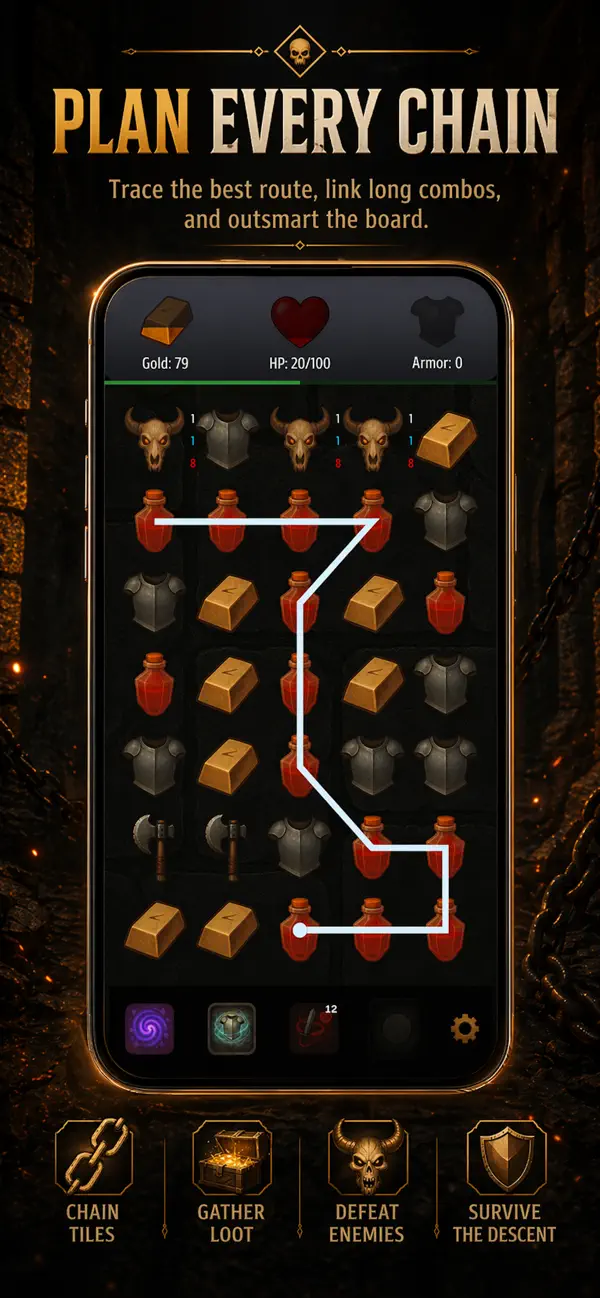
Player-drawn chains
Tracing a route gives players direct control over the length, value, and tactical purpose of every move.
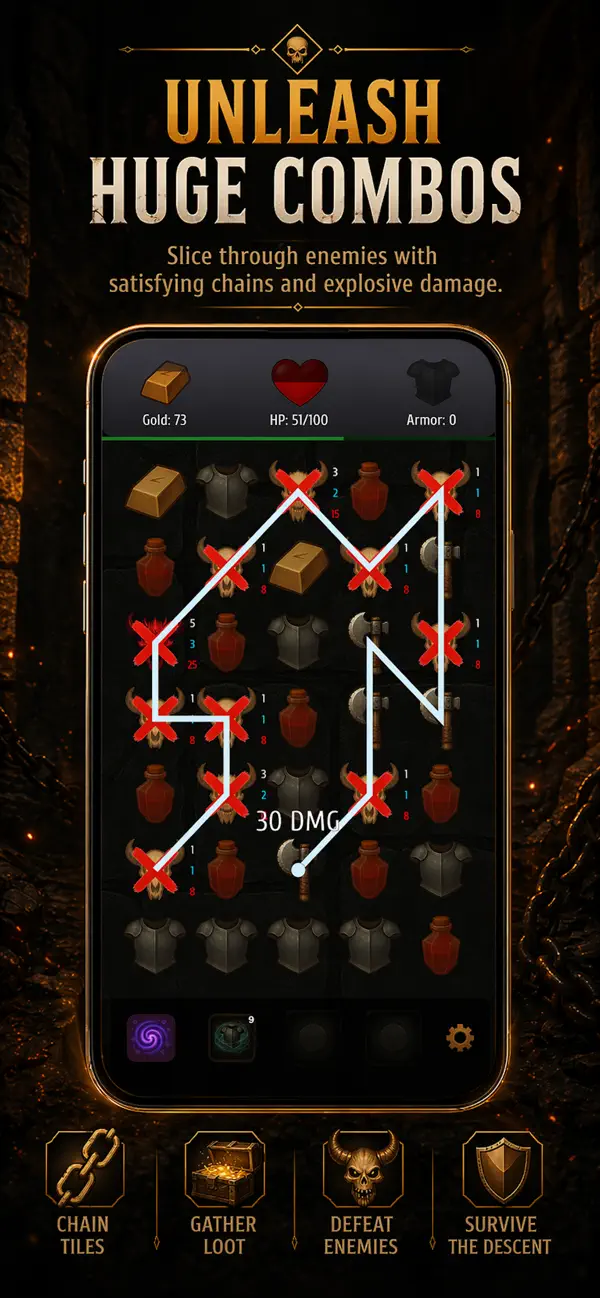
Visible pressure
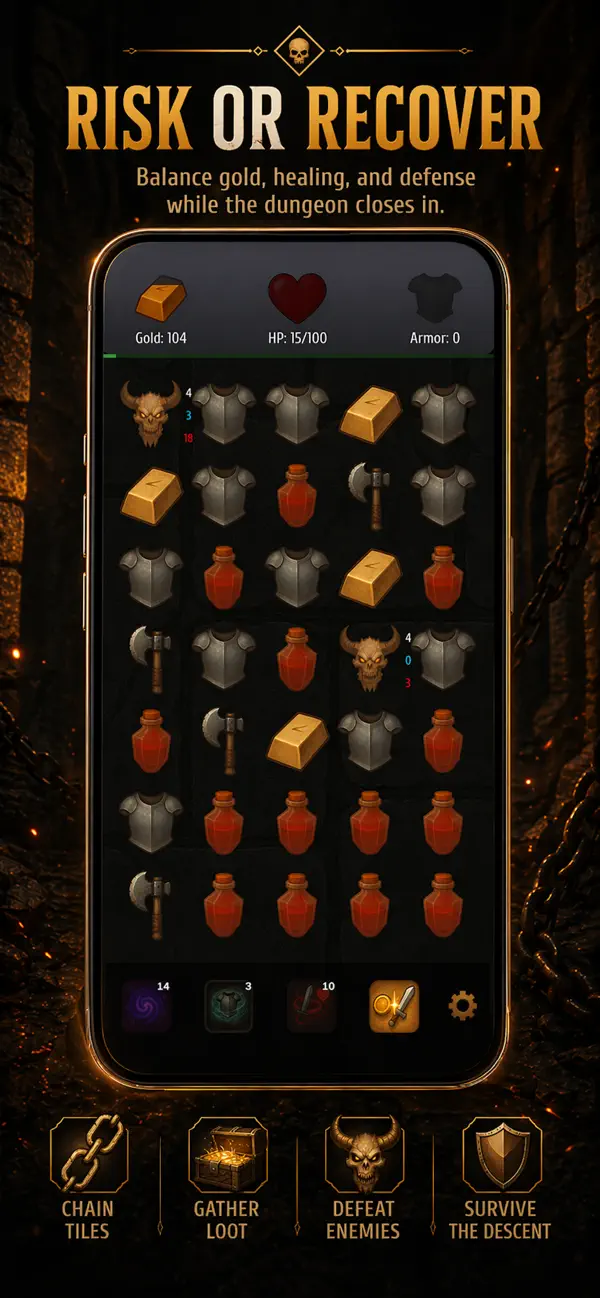
Enemy values and player resources remain on screen so each turn can be evaluated before committing.
Build-changing powers
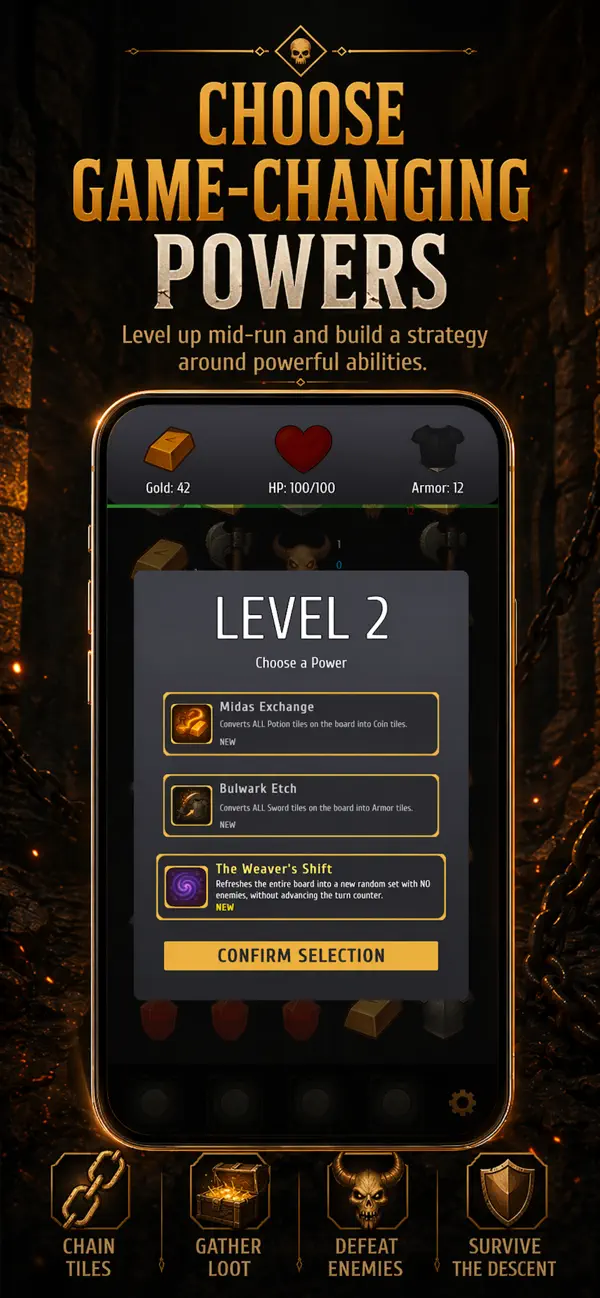
Level-up choices alter tiles, resources, and board states so repeated runs develop differently.
Competing priorities
Attacking, healing, adding armor, and collecting gold create tradeoffs instead of one automatic best match.
Shipping and iteration
The first update strengthened both onboarding and system reliability.
Version 1.0.1 added a guided tutorial covering objectives, chains, enemy statistics, XP, and powers. It also improved menu input blocking and safe-area behavior, corrected Weaver’s Shift so it produces a safe board, fixed multiple power effects, and added further interface polish.
Product operations
The game was launched as a live, replayable system.
- App Store presentation and release management
- Run-based combat, progression, and personal-best systems
- Advertising and analytics implementation
- Privacy disclosures and public support documentation
- Guided tutorial and onboarding improvements
- Post-launch power, input, and interface fixes