
The design challenge
Test memory without making mistakes feel arbitrary.
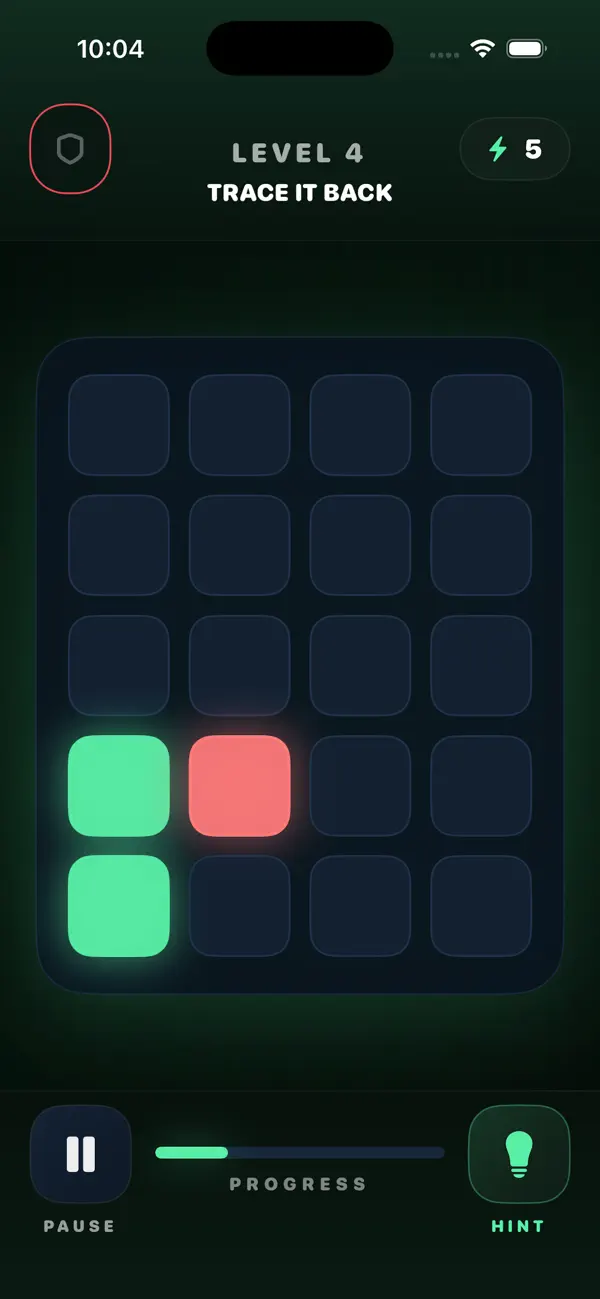
A memory game needs to remove information by design, but it still has to feel fair. Players need enough time and visual structure to encode a route, then clear feedback about where their recall succeeded or failed.
The challenge was extending that one repeatable action across hundreds of levels while preserving readability, pacing, and a sense of forward movement. Recovery tools also had to help without replacing the core skill being tested.
The approach
Build progression around clarity, pressure, and recovery.
Two-phase play
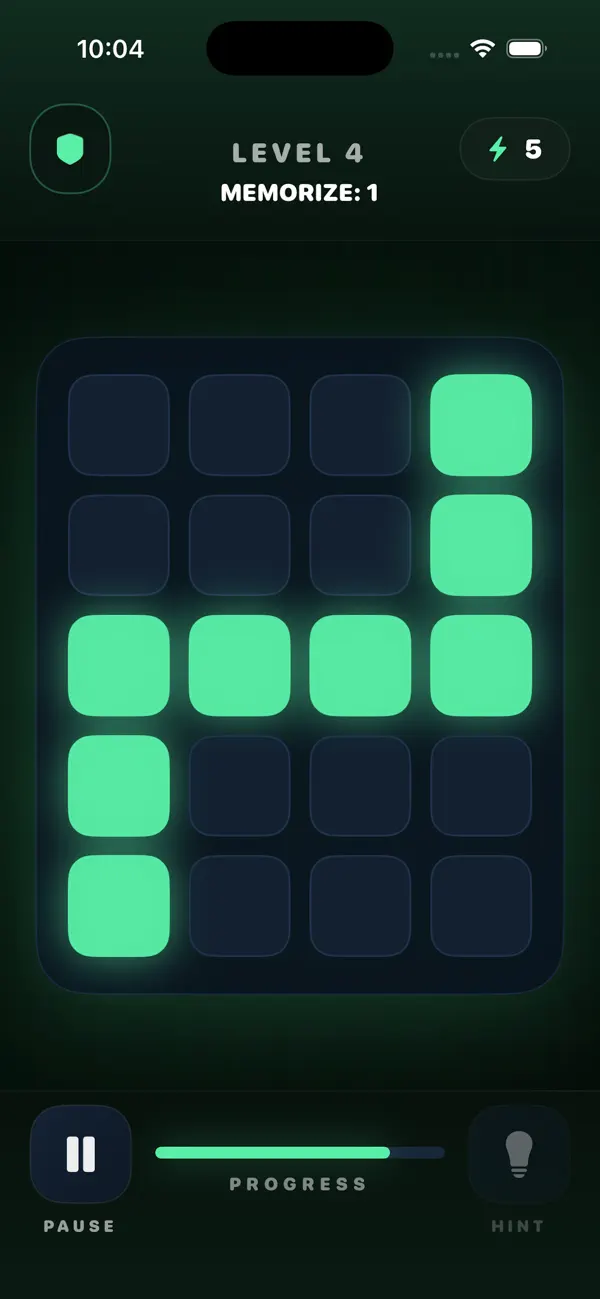
A clear transition from “memorize” to “trace it back” keeps the task and player state unambiguous.
Readable paths
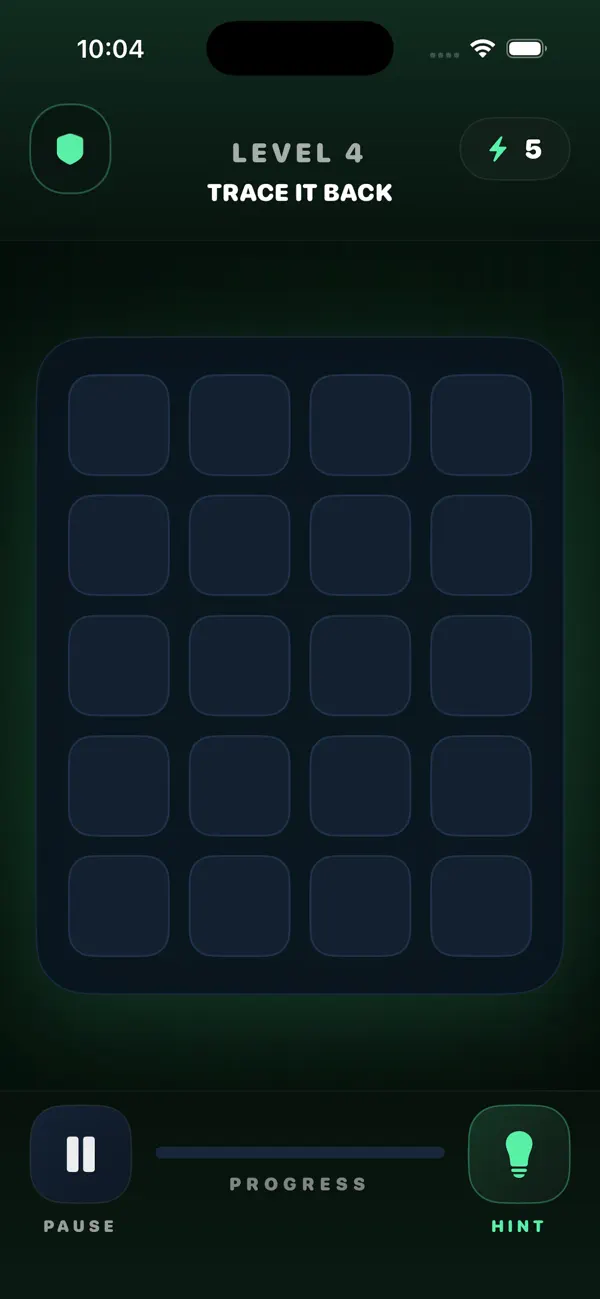
High-contrast neon tiles make turns and route length easy to study before the board goes dark.
Useful recovery
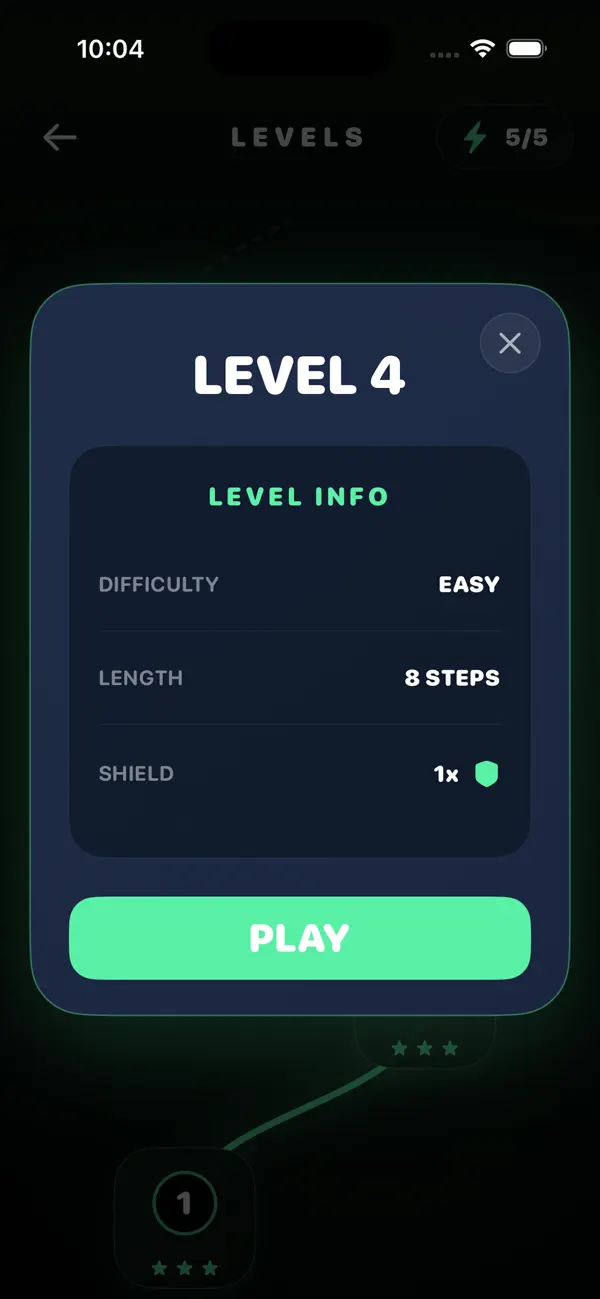
Shields absorb mistakes while hints provide optional assistance when recall alone is not enough.
Visible mastery
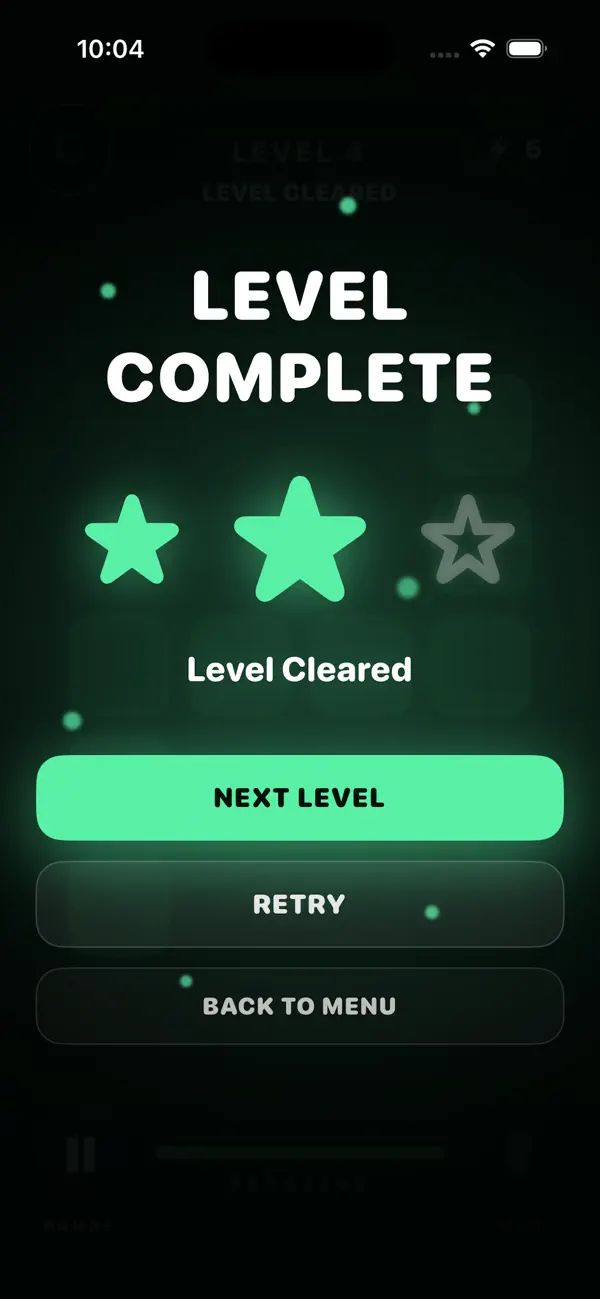
Stars, level progress, and statistics reward improvement beyond simply reaching the next puzzle.
Shipping and iteration
The first public update refined the presentation.
Version 1.0 established the complete 500-level product, progression systems, settings, statistics, monetization, and App Store release. Version 1.0.1 followed with additional interface polish, continuing the product’s post-launch refinement.
Product operations
The game was built to operate beyond its first release.
- App Store presentation and release management
- Level, star, energy, shield, and hint systems
- Statistics, haptics, sound, and settings
- Advertising and in-app purchase implementation
- Privacy disclosures and public support documentation
- Post-launch interface polish