
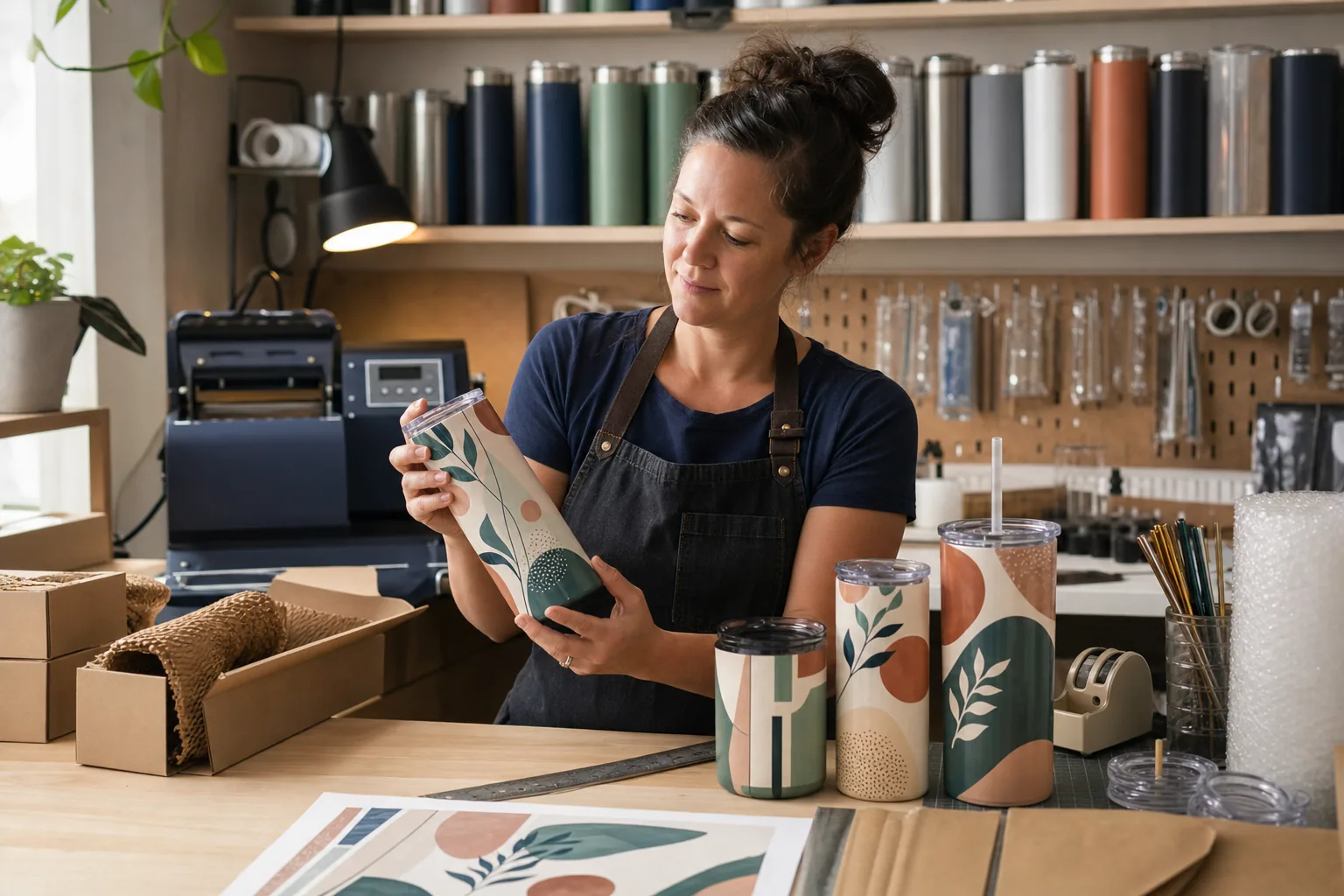
To sell personalized tumblers online successfully, standardize the exact blank and decoration process, publish real dimensions and capacity, show every included component, collect names and artwork without ambiguity, confirm reproduction rights, use proofs where errors would be costly, support care and performance claims with relevant evidence, price failures and service time, and connect every order to a repeatable production record.
The short answer: the blank and the decoration are one finished product
A customer is not buying only a name or design. They are buying a particular vessel, lid, straw or accessory set, exterior finish, decoration, and promise about use and care. A beautiful mockup cannot answer whether the cup fits a holder, how the lid closes, how large the design is, or whether the finish survives the care method being advertised.
The strongest tumbler store defines the physical product first, then controls the choices that can change safely. Anything that needs interpretation—an uploaded logo, a wrap made from a photograph, a team order with different names, or a firm event deadline—deserves a quote or proof workflow.
Make the personalization special, but make the specification repeatable.
1. Choose the offer before choosing the storefront options
| Offer type | Customer expectation | Useful workflow |
|---|---|---|
| Ready-made designs | A shown pattern on a defined vessel | Standard product, controlled colors and sizes, finished inventory |
| Name personalization | Exact spelling in an established template | Required field, character rules, capitalization example, optional proof |
| Customer artwork | A supplied logo, photo, or design adapted to the tumbler | File requirements, rights confirmation, feasibility review, proof, approval |
| Made-to-order collection | A known design produced after purchase | Blank inventory, production queue, realistic processing time |
| Group or event orders | Many coordinated items, sometimes with different names | Roster template, deadline, deposit, master proof, individual data check |
| Wholesale or corporate work | Repeatable quantity, packaging, color, and reorder terms | Quote, specification, sample, purchase approval, invoice, batch record |
A shop can offer several models, but do not send every customer through the same product page. A single-name template is not the right intake method for a 75-person team roster, and an open text box cannot define a full custom wrap.
2. Document the exact tumbler blank and every included component
“Twenty-ounce tumbler” is not a complete specification. Shape, usable capacity, height, widest diameter, base diameter, lid style, straw length, handle clearance, mouth opening, material, interior construction, exterior coating, and component compatibility can differ.
For each blank, record:
- Manufacturer, model, supplier, purchase date, lot or batch, and country of origin when relevant
- Advertised and independently checked capacity, with the measurement method
- Height, base diameter, maximum width, opening, handle clearance, and empty weight
- Body and interior materials, wall construction, coating, and intended beverage conditions
- Exact lid, gasket, stopper, straw, handle, boot, or box included
- Supplier care, temperature, food-contact, and performance documentation
- Surface preparation and decoration methods the blank is designed to accept
- Replacement-component availability and whether parts are cross-compatible
Do not quietly substitute a visually similar blank when stock runs out. A new supplier or model can change the color, taper, seam, coating, press settings, lid fit, package size, and customer experience. Treat it as a product change that needs inspection and fresh photography.
3. Match the decoration method to the product promise
| Method | Useful strengths | Details to control |
|---|---|---|
| Sublimation | Full-color designs on compatible coated blanks | Blank coating, wrap fit, color profile, time, temperature, pressure, seam, ghosting |
| Laser engraving | Removes or changes a compatible surface for a precise durable mark | Blank coating, rotary alignment, power and speed, placement, cleanup, contrast |
| Adhesive film or vinyl | Flexible names, shapes, and small runs | Film type, adhesive, surface prep, application, edge placement, cure, care limits |
| UV or direct printing | Full-color exterior decoration on compatible shapes and coatings | Ink system, adhesion, pretreatment, white layer, varnish, geometry, cure, abrasion |
| Epoxy or resin decoration | Layered visual effects and embedded decoration | Material suitability, mixing, cure, workspace controls, finished surface, care and claims |
| Purchased transfer or wrap | Efficient access to produced graphics | Commercial license, storage, age, application system, lot consistency, supplier evidence |
Do not describe all methods as interchangeable. A laser-engraved powder coat and an applied film may have very different feel, edge, design limits, cleanup, and care. Name the method accurately and photograph the finished surface.
4. Confirm the right to reproduce names, artwork, logos, and photographs
The U.S. Copyright Office's visual-art guidance explains that an artwork owner controls making and selling copies. Use original artwork or written commercial permission that covers the actual product and sales channel.
Keep a simple rights record
- Creator, source file, date, version, and approval
- Licenses for artwork, fonts, photos, clip art, patterns, transfers, and other assets
- Terms for customer-supplied material and confirmation that the customer can authorize reproduction
- Approval from the business, organization, photographer, or rights holder when relevant
- Trademark review for brand names, logos, slogans, school marks, team identifiers, and product comparisons
Popular characters, music artwork, sports marks, logos, celebrity images, and copied marketplace designs are not made safe by changing a color or adding a name. An upload checkbox documents a representation; it does not create rights the customer does not have. Seek qualified legal advice when permission is uncertain.
5. Build a product page that describes the finished drinkware
Each page should identify the blank and contents before asking the customer to personalize it.
- Capacity and exact dimensions, including base diameter when cup-holder fit is relevant
- Body, interior, exterior coating, insulation construction, and finish
- Lid type, closure behavior, gasket, straw, handle, boot, and other included pieces
- Decoration method, location, approximate printed or engraved area, seam or gap, and surface feel
- Available vessel colors and how they affect the design
- Personalization fields, examples, character limits, case handling, fonts, colors, and placement
- Whether a proof is included and what it does or does not verify
- Supported beverage, temperature, insulation, leak, spill, microwave, dishwasher, and care statements
- Made-to-order processing, approval delays, rush rules, shipping, and event-date limitations
- Packaging, gift options, damage reporting, custom-product returns, and replacement terms
The FDA distinguishes a finished food-contact article from the substances and materials used to make it. Its food-contact terminology is a useful reminder that the completed vessel and its components matter—not only a supplier's statement about one raw material.
6. Photograph the exact vessel, finish, lid, and decoration
Use images of the physical product, not only a flat digital wrap. Shopify's product-media guidance supports multiple images and video to help customers understand product size and quality.
| View | What it should answer |
|---|---|
| Full front and back | How does the complete decoration wrap, end, or repeat? |
| Top and lid | What lid, opening, stopper, and straw arrive? |
| Base and profile | What is the shape and likely cup-holder footprint? |
| Close detail | What do the engraving, ink, film edge, coating, seam, and finish look like? |
| Scale | How large is the tumbler compared with a hand, ruler, or common setting? |
| Color range | How do the actual vessel and decoration colors differ? |
| Package contents | Which lid, straw, accessories, insert, and box are included? |
Digital previews can explain choices, but label them as previews. Photograph at least one produced example for each material, finish, vessel family, and decoration method. Do not edit away seams, coating texture, normal engraving contrast, or other information the buyer should see.
7. Use variants for choices that are genuinely interchangeable
Shopify's current variant system can represent combinations such as vessel size, color, or lid style, with separate price and inventory. Use it when every offered combination is valid and understandable.
A 20-ounce straight tumbler and a 40-ounce handled cup may need separate products because their proportions, artwork templates, lids, packaging, price, photographs, and uses differ. Forcing them into one listing can create wrong previews and missed price changes.
Good candidate options
- Established vessel colors within one blank model
- A controlled set of tested sizes that each have correct artwork and photographs
- Design choices that do not alter the production method
- Optional accessories whose inventory and compatibility are reliable
Use clear color names and real photos. Avoid calling one supplier's coating by another brand's trademark, and do not imply compatibility with a branded product unless the claim is accurate and properly presented.
8. Make spelling, layout, proofing, and approval unambiguous
The product page should say whether text will be reproduced exactly as entered, automatically changed to uppercase, adjusted for length, or rejected when it does not fit. Show a short and long example so customers understand how the template responds.
Use a proof when the customer must approve:
- Spelling, punctuation, capitalization, or roster data
- Logo cleanup, photograph cropping, wrap placement, or seam position
- Design scale around handles, tapers, lids, or other geometry
- Color expectations that a screen cannot guarantee
- Multiple names, departments, jersey numbers, or gift messages
State how the proof is delivered, the number of included revision rounds, the response deadline, whether silence delays production, and when approval becomes final. A proof normally checks layout and content; it does not guarantee exact monitor-to-product color or expand unsupported performance claims.
Complex uploads, live previews, automated proof generation, and multi-recipient personalization usually require paid apps or custom development and are outside a basic store build.
9. Support food-contact, care, and performance claims
The FTC's advertising substantiation policy says objective product claims need a reasonable basis before they are advertised. That applies to claims such as food safe, BPA free, non-toxic, lead free, dishwasher safe, leakproof, spill resistant, sweat free, vacuum insulated, keeps drinks cold for a stated time, scratch resistant, fade resistant, and microwave safe.
Evidence for the undecorated blank may not establish a claim for the finished product. Heat, abrasion, engraving depth, exterior coatings, applied film, ink, resin, lid components, cleaning, and curing can change performance. Preserve supplier documents for the exact model and test the complete construction under the conditions you advertise.
Write qualified, usable care information:
- Permitted beverage temperatures and prohibited uses
- Hand-wash or dishwasher method, rack position, detergent, and cycle limits if supported
- Whether soaking, scrubbing, abrasives, bleach, or other cleaners are excluded
- Microwave, freezer, oven, stovetop, flame, and hot-car warnings where applicable
- Lid position and whether the product is spill resistant rather than leakproof
- Care for straws, gaskets, valves, coatings, and applied decoration
Do not use a broad “use at your own risk” disclaimer to correct a product page that makes an unsupported safety or performance promise.
10. Set a finished-product quality standard
Define acceptable alignment, color, seam, ghosting, banding, film edge, engraving contrast, coating condition, residue, lid fit, scratches, dents, contamination, and packaging. Inspect the vessel and accessories before decorating so supplier defects are not discovered after labor is invested.
Process controls
- Confirm the correct blank model, color, lot, lid, straw, and order record.
- Inspect and clean the surface using the documented method.
- Load the approved artwork or template version.
- Record the relevant printer, profile, ink, transfer, press, rotary, laser, film, or cure settings.
- Allow required cooling, curing, or dwell time.
- Inspect the entire circumference, seam, rim clearance, base, lid, and accessories.
- Clean, count, photograph when appropriate, and package the approved item.
Retain an approved sample for repeated products. If the blank, coating, material, printer, ink, transfer, or supplier changes, run a new qualification instead of assuming the old settings and claims remain valid.
11. Price the complete personalized order
The blank is only the start. Include the lid and straw, artwork or template setup, customer communication, proofing, file cleanup, transfer or film, ink, engraving or pressing time, failed pieces, testing, cleaning, labor, equipment, software, packaging, transaction costs, replacements, overhead, risk, and profit.
| Order type | Cost that is easy to miss |
|---|---|
| Locked design | Finished inventory, photography, listing maintenance, and picking |
| Single name | Order review, unique file generation, spelling responsibility, and setup |
| Customer artwork | Rights review, cleanup, proofing, color expectations, and uncertain production time |
| Full wrap | Template fit, seam, transfer waste, press time, and higher failure risk |
| Bulk roster | Data cleanup, individual versioning, sorting, approval, and count reconciliation |
| Rush order | Capacity displacement, expedited blanks or shipping, and support risk |
Bulk discounts should come from measurable setup, purchasing, and run efficiencies—not simply from multiplying a retail price by a smaller percentage. Set minimum quantities and deposits where appropriate.
12. Track blank inventory separately from finished and committed stock
A shelf of blank tumblers is not automatically available inventory. Some pieces may be reserved for paid orders, held for testing, mismatched with current lids, damaged, or committed to an upcoming event.
- Blank stock: Verified bodies and matching components ready for production
- Work in progress: Assigned to an order but not yet inspected
- Finished goods: Completed, approved, and ready to sell or ship
- Reserved stock: Held for bulk orders, replacements, samples, or promised launches
- Unsellable stock: Dented, scratched, wrong coating, missing parts, or failed decoration
Made-to-order listings should have capacity limits. Count design work, proof wait, press or engraving time, cooling, inspection, packing, and other commitments before accepting rush orders. Update published processing times before peak gift seasons.
13. Package the exact vessel and accessories for the trip
Test packaging for the product's weight, height, handle, lid, straw, finish, and destination. A straight tumbler, handled cup, glass can, and gift set do not necessarily share one safe box.
Packaging should prevent:
- Dents, crushed lids, broken straws, and handle impact
- Abrasion between the decorated surface and accessories
- Movement that lets the product strike the box
- Moisture exposure and contamination
- Missing loose components or confusing assembly
- Gift packaging being mistaken for the shipping container
Weigh and measure the sealed shipment—not only the blank. Run test shipments and document the pack-out. Publish realistic shipping estimates separately from made-to-order processing, and do not guarantee an event arrival date when the carrier service does not provide that guarantee.
14. Separate customer-approved personalization from production defects
State what happens when the shop misspells a name, uses the wrong vessel, produces an unapproved layout, omits an accessory, damages the coating, or ships an item that arrives damaged. Those are different from a customer approving an incorrect spelling or choosing the wrong color.
Custom-product return limits should be visible before checkout and consistent with applicable rights. A “no returns” statement should not be used to avoid responsibility for wrong, defective, or damaged work.
Create a simple evidence and remedy process: order number, photographs of the item and package, problem description, reporting window, response time, and likely remedy. Track root cause—intake, proof, artwork, production, inspection, packing, or carrier—so repeat replacements decline.
15. Give group, corporate, and event orders a proper quote path
Bulk work can create strong repeat business, but it needs more structure than a quantity dropdown.
Capture:
- Buyer, organization, billing contact, shipping destination, and decision maker
- Blank model, capacity, color mix, lids, straws, accessories, and packaging
- Decoration method, artwork, placement, colors, and rights approval
- Quantity, individual names or numbers, and a clean roster format
- Physical-sample or digital-proof needs and approval responsibility
- In-hand date, production window, split destinations, and carrier service
- Deposit, balance, revisions, change orders, cancellation, overruns, and replacement terms
Use one controlled roster rather than personalization scattered across messages. Lock the final count and data version before production. When one spelling changes after approval, record exactly which piece is being remade and whether the schedule or price changes.
16. Connect checkout to a production traveler
- Confirm payment, fraud checks, blank availability, personalization, and requested timeline.
- Review artwork rights, file quality, vessel fit, and method feasibility.
- Create and deliver the proof when required.
- Record approval, revision, blank, components, artwork version, and due date.
- Reserve the correct inventory and schedule production.
- Prepare the surface and run the documented decoration process.
- Cool or cure as required, clean, assemble, and inspect.
- Match the finished item to the order and roster.
- Package using the validated pack-out and purchase the correct service.
- Record actual labor, failure, replacement, and margin data.
Do not place private customer files into a storefront's publicly accessible file area. Use an appropriate controlled upload and retention process, limit access, and delete files according to documented business needs and promises.
17. Build search pages around real product and occasion intent
Useful collections can address product form, audience, occasion, or order type: handled tumblers, slim tumblers, engraved drinkware, personalized teacher cups, wedding-party sets, company-logo orders, team gifts, or full-wrap designs. Only target terms the actual products fulfill.
Product titles should combine the design or use with meaningful vessel details. Descriptions should answer capacity, size, material, lid, decoration, personalization, proof, care, processing, and shipping questions without stuffing variations of “custom tumbler.”
Useful supporting articles
- Sublimation versus engraving for personalized drinkware
- How to choose tumbler capacity and base size
- What a personalization proof verifies
- How to prepare a logo or team-name roster
- How to care for the exact decoration methods the shop sells
- How bulk tumbler ordering works from quote to delivery
Photograph real production, publish genuine customer examples with permission, collaborate with event businesses and local organizations, and earn referrals through accurate service. Avoid building traffic around unlicensed characters or brand confusion.
18. Launch with a small, controlled tumbler collection
Before opening checkout:
- Select up to ten defined products using verified blanks and components
- Document dimensions, capacity, materials, decoration, care, and performance evidence
- Confirm artwork rights and personalization rules
- Photograph the actual vessels, colors, finish, lid, accessories, and package
- Calculate pricing for ready-made, personalized, custom-artwork, and bulk orders
- Test the complete decoration, cure, inspection, and pack-out process
- Write proof, processing, rush, shipping, event-date, return, and replacement terms
- Set blank inventory and production capacity honestly
- Test every variant, personalization field, notification, payment, shipping, and mobile view
- Prepare support answers for spelling, color, lid use, care, tracking, damage, and deadlines
Start with one or two blank families and decoration methods the shop understands deeply. Adding another cup shape creates new templates, photography, settings, packaging, inventory, and support—not just another color swatch.
19. What the free Shopify build can cover
For accepted US small businesses, Overtime Innovations can build one new Shopify client-transfer store at no build fee. The standard scope includes up to ten products, up to three collections, and basic launch copy and graphics prepared from materials supplied by the business.
The typical build takes 10–15 business days once required materials are ready, generally includes up to three consolidated revision rounds, and comes with 14 days of email-only support beginning on Day 0. The business remains responsible for its products, blanks, artwork rights, claims, pricing, policies, customer support, testing, and professional advice.
Outside the standard free scope
- Work inside an existing Shopify store
- Advanced artwork uploads, roster imports, or file processing
- Live personalization previews, automatic proofs, configurators, or quote engines
- Wholesale portals, subscriptions, complex volume pricing, or corporate-order systems
- Production, print-on-demand, accounting, shipping, or fulfillment integrations
- Custom applications, paid apps, premium themes, product testing, or compliance work
The owner pays Shopify plan charges, domain costs, payment processing, themes or apps they choose, blanks, equipment, materials, packaging, shipping, taxes, insurance, and other third-party expenses.
Frequently asked questions
Is Shopify good for selling personalized tumblers?
It can provide a branded home with controlled products, variants, inventory, and direct customer relationships. The business still needs a traffic strategy and a reliable personalization and fulfillment process.
What belongs on a personalized tumbler page?
Identify the exact blank, capacity, dimensions, material, insulation, finish, included lid and straw, decoration method, personalization limits, proof policy, supported care and performance claims, processing, packaging, shipping, and returns.
Does every order need a proof?
Not necessarily. A locked single-name template may be clear enough without one. Use a proof when spelling, artwork, placement, color, crop, layout, or roster data needs customer approval, and define the approval deadline.
Can I use customer logos or popular characters?
Only reproduce artwork when you or the customer have the necessary rights. Terms and checkboxes document an agreement but do not create permission for unauthorized brands, characters, team marks, or copied designs.
How should personalized tumblers be priced?
Include the blank and accessories, artwork, setup, production materials, labor, failures, equipment, testing, cleaning, packaging, shipping support, fees, service, overhead, risk, and profit. Price bulk work from actual savings and workload.
Can Overtime Innovations build the store for free?
The standard offer covers one new Shopify client-transfer store with up to ten products and three collections for an accepted US small business. Advanced uploads, live previews, proofs, quotes, wholesale, integrations, and existing-store work are outside that scope.
Make personalization the final controlled step—not the source of chaos
A strong tumbler store lets the customer enjoy choosing a design while the business quietly controls blanks, artwork, proofing, production, inspection, packaging, and deadlines behind the scenes.
Ready to prepare the first collection?
- Select up to ten products based on verified blanks
- Document specifications, methods, personalization, evidence, and pricing
- Prepare accurate photographs, packaging, shipping, and policies
- Confirm the standard build fits without advanced previews or integrations